Career Guide
How to Become a Phlebotomist
How Do You Become a Phlebotomist?
To become a phlebotomist, you finish a phlebotomy training program with supervised live draws, pass a national certification exam such as the NHA CPT ($134) or ASCP PBT ($155), and get a state credential if you work in California, Louisiana, Nevada or Washington. The median program takes 14 weeks and publishes a price of $1,450. Low-cost options start at Mayland Community College, at $180.
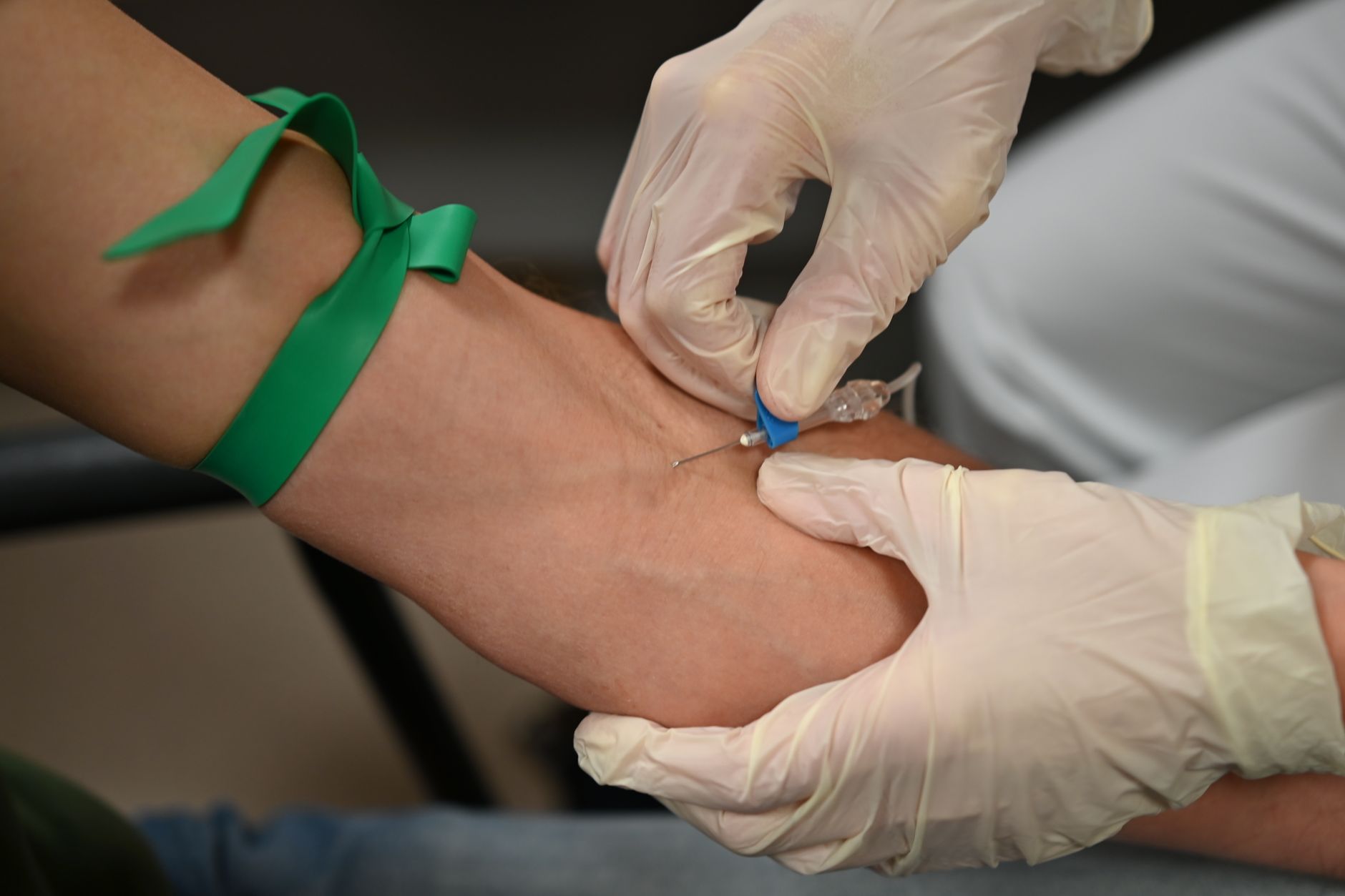
How to Become a Phlebotomist in Five Steps
Becoming a phlebotomist is a short route into health care. You don’t need a degree, and most people finish training in a few months. The path has five steps, and the order matters because your state’s rule decides which program you can use.
- Check your state’s rule. Four states were confirmed on official pages to require a state phlebotomy credential: California, Louisiana, Nevada and Washington. If you live in California, only a CDPH-approved California program counts.
- Choose a training program with clinical draws. Pick one that prepares you for a national exam and gets you the live draws that exam requires.
- Complete your supervised draws. Each national exam has its own count, from 30 to 100 venipunctures.
- Pass a national certification exam. The NHA CPT, ASCP PBT, AMT RPT and NCCT NCPT are the four that lead the field.
- Apply for your state credential if you’re in one of the four states, then start applying for jobs.
The rest of this guide walks through each step with real program numbers.
Know Your State’s Phlebotomy Requirements
Most people skip this step and regret it. Here’s what each of the four confirmed states asks:
| State | Credential | Key requirement |
|---|---|---|
| California | Certified Phlebotomy Technician I (CPT I) | A CDPH-approved California program with 40 classroom and 40 clinical hours, 50 venipunctures and 10 skin punctures, a national exam and a $100 application |
| Louisiana | Phlebotomist certificate ($40) | A board-approved exam, but phlebotomists working for physicians, hospitals, licensed clinics and nursing homes are exempt |
| Nevada | Laboratory Assistant certificate | A high school diploma or GED, plus a national certification from an approved organization for most applicants |
| Washington | Medical Assistant-Phlebotomist | High school or equivalent, plus an accredited college program, a national certification, or practitioner-attested training |
If your state isn’t one of these four, it wasn’t confirmed to require a state credential on an official page, so check with your state’s health department and the employers you’d apply to. The phlebotomy license requirements page covers each of the four in full.
Pick the Right Phlebotomy Program
This site lists 800 phlebotomy programs at 761 schools in all 50 states and D.C., each checked on the school’s own pages. They come in a few forms:
- Non-credit courses (411 programs) at community colleges, technical centers and adult schools. Usually the shortest and least expensive.
- Credit certificates (342 programs), usually a semester or two at a community college, often with more clinical hours.
- Diplomas at private career schools, some combining phlebotomy with EKG or lab assistant training.
Here’s how a range of real programs compare:
| School | Program type | Length or hours | Clinical | Published price |
|---|---|---|---|---|
| Mayland Community College, NC | Non-credit | 220 to 222 hours | 80 hours | $180 tuition (fall 2025) |
| Wilkes Community College, NC | Non-credit | 212 hours | 104 hours | $195.55 |
| Bevill State Community College, AL | Non-credit | 12 weeks, day or evening | $1,025, includes exam fee | |
| Lively Technical College, FL | Certificate | 165 clock hours | $810.80 total for Florida residents | |
| Otero College, CO | Certificate, NAACLS | 2 semesters or 8 weeks | 105-hour internship | Per-credit tuition |
| Modesto Junior College, CA | CDPH-approved | About 6 to 8 months | 40-hour externship | $4,200, includes NHA exam |
| Kaiser Permanente School of Allied Health Sciences, CA | Certificate | 9 weeks | 160 hours | Tuition and fees $4,700 |
Blank cells mean the school’s page gives no figure for that column.
Across all programs, the median length is 14 weeks and the median published price is $1,450. But that median hides a wide range: 265 programs publish a price, from $180 to $11,780.
Approval is worth checking too. 34 programs are NAACLS-approved, which is the ASCP’s most direct route, and 71 state an approval from their state, including California’s CDPH list. Federal data shows how much training happens: schools reported 7,759 phlebotomy awards in 2022-23 to the Department of Education (IPEDS, CIP 51.1009), at 283 schools. Those are awards conferred, not graduates.
What to look for, in order: clinical draws built into the course, the national exam the program names, a schedule you can keep (239 programs offer evening classes and 64 weekend classes), and a price that says what it includes. The best phlebotomy programs ranking scores all of them.
The Route to Your First Phlebotomy Job
- Choose a training program with supervised live draws: 800 verified, with a median stated length of 14 weeks.
- Finish the venipunctures your exam asks for: 30 for the NHA CPT, 50 for the AMT RPT, 100 on the ASCP PBT's route 2.
- Pass a national certification exam: fees run $119 to $155.
- Get the state credential if your state requires one: California, Louisiana, Nevada and Washington.
- Apply for phlebotomy jobs: the national median is $45,230 a year (BLS, May 2025).
States That Require a State Phlebotomy Credential
| State | Credential | Issued by |
|---|---|---|
| California phlebotomy requirements | Certified Phlebotomy Technician I (CPT I) | California Department of Public Health, Laboratory Field Services |
| Louisiana phlebotomy requirements | Phlebotomist certificate | Louisiana State Board of Medical Examiners |
| Nevada phlebotomy requirements | Laboratory Assistant certificate | Nevada Division of Public and Behavioral Health, Bureau of Health Care Quality and Compliance |
| Washington phlebotomy requirements | Medical Assistant-Phlebotomist certification | Washington State Department of Health |
The four states confirmed on official state pages, checked 2026-11-13.
Complete Your Supervised Draws
Every national exam asks you to document live draws on real people, not just practice on a training arm. The counts differ:
- NHA CPT: at least 30 venipunctures and 10 capillary sticks.
- AMT RPT: at least 50 venipunctures and 10 skin punctures.
- ASCP PBT, route 2: at least 100 successful unaided venipunctures (route 1, a NAACLS program, doesn’t set a separate count).
- California CPT I: 50 venipunctures and 10 skin punctures.
Among the 99 programs that state a required draw count, the median is 50. And 548 of the 800 programs include clinical or externship training, with a median of 100 clinical hours among the 225 that state hours.
The draws are where people stall. A program without built-in clinical time can leave you finished with the classes but unable to sit the exam. Calhoun Community College in Huntsville, Alabama, shows how this works in practice. It requires 100 successful documented blood draws on patients before you sit its certification exam, but the 1- or 2-week clinical rotation where you get them is optional, at $249 on top of the $799 course. Skip the rotation and you’d need another way to get those draws. That’s fine if you know it going in, and costly if you don’t. The venipuncture requirements guide compares every exam’s count.
Pass a National Certification Exam
The four exams that lead the field:
| Exam | Fee | How you qualify | Renewal |
|---|---|---|---|
| NHA CPT | $134 | A training program in the last 5 years, or 1 year of supervised work | Every 2 years, 10 CE credits |
| ASCP PBT | $155 | A NAACLS program, 40 classroom hours plus 100 draws, or 1 year of full-time work | 9 CE points every 3 years |
| AMT RPT | $125 | A 120-hour course or NAACLS program, guided practice, or 1,040 work hours | Annual fee, 24 points every 3 years |
| NCCT NCPT | $119 | An NCCT-authorized program, or 1 year of full-time work | Every year, 12 CE hours |
Of the 800 programs, 436 name at least one of these. The NHA CPT leads with 243, then the ASCP PBT (145), AMT RPT (50) and NCCT NCPT (35). And 93 programs say the exam fee or a voucher is in the price.
Which should you choose? If you want the fastest path, the NHA CPT asks for the fewest draws. If you want a hospital lab job, the ASCP PBT is the one hospital labs often ask for. The phlebotomy certification guide goes deeper, and the certification checker matches your training to the exams you qualify for.
Apply for Your State Credential and Your First Job
In California, you send your education records and $100 application to CDPH’s Laboratory Field Services after passing the exam. In Washington, you can work under training-level supervision for up to 180 days while your application is processed. In Nevada, your employer must be a Nevada-licensed laboratory. In Louisiana, you need the $40 certificate only if your employer isn’t exempt.
Then the job search. Phlebotomists earned a median of $45,230 a year in May 2025, or $21.75 an hour, and 143,540 held the job nationally, according to the Bureau of Labor Statistics. Pay varies widely by state. The phlebotomist salary guide has the figures.
Who Each Route Suits
- You work full time: an evening or weekend program. Bevill State runs day and evening classes; many California schools run weekend courses.
- You want the lowest price: a North Carolina community college non-credit course, many under $200 before fees.
- You want a hospital lab job: a NAACLS-approved program like Otero College’s, which prepares you for the ASCP exam.
- You want proof a program works: look for published pass rates. Bossier Parish Community College in Louisiana reports a 100% ASCP pass rate for every clinical class from Spring 2023 to Fall 2025.
To see programs near you, use the school finder, or check how long phlebotomy training takes and what it costs.
Frequently Asked Questions
How Long Does It Take to Become a Phlebotomist?
The median program on this site takes 14 weeks, based on 413 programs that state a length. Programs range from 2 weeks to 80 weeks, and you add a few weeks for the exam and any state application.
Do You Need a Degree to Become a Phlebotomist?
No. Most programs are short certificates or non-credit courses: 411 of the 800 programs on this site are non-credit and 342 are certificates. A high school diploma or equivalent is the usual starting point, and states that license phlebotomists ask for one.
Can You Become a Phlebotomist Online?
Partly. 137 programs teach some of the course online, but every exam needs documented live draws on people, so the clinical part is always in person. California doesn't accept programs from outside the state.
Which Certification Should You Get First?
The NHA CPT is the most named: 243 programs prepare you for it, and it asks for 30 venipunctures and 10 capillary sticks. The ASCP PBT (145 programs) is the one hospital labs often ask for and needs a NAACLS program or 100 unaided venipunctures.
How Much Do Phlebotomists Make?
The median was $45,230 a year in May 2025, or $21.75 an hour, according to the Bureau of Labor Statistics.
Can You Work as a Phlebotomist Without Certification?
That depends on your state and employer. California, Louisiana, Nevada and Washington were confirmed to require a state credential, with Louisiana exempting many employers. Elsewhere, employers set their own hiring rules.
Keep Reading
- How Long Training TakesHow many weeks, classroom hours and clinical hours phlebotomy programs take, from programs checked on schools' own pages
- Phlebotomy CertificationThe four national phlebotomy exams side by side: who can sit each one, the live-draw counts and hours they ask for, fees, renewal and which programs prepare you
- Phlebotomy Training CostWhat phlebotomy courses and certificates cost, from the prices schools publish, what the price includes and what it leaves out
- Venipuncture RequirementsHow many successful venipunctures and skin punctures each national exam and the licensing states require, and how many programs build in
- Best Phlebotomy ProgramsEvery verified program, ranked
- Phlebotomy License Requirements by StateThe four states that require a state credential
Sources
- NHA: Certified Phlebotomy Technician (CPT)
- ASCP Board of Certification: Phlebotomy Technician (PBT)
- AMT: Registered Phlebotomy Technician (RPT)
- NCCT: Phlebotomy Technician (NCPT)
- CDPH Laboratory Field Services: Phlebotomist certification
- BLS OEWS May 2025: Phlebotomists (31-9097)
- National Healthcareer Association (NHA): Certified Phlebotomy Technician (CPT) eligibility, read 2026-11-13
- ASCP Board of Certification: Phlebotomy Technician, PBT(ASCP) eligibility, read 2026-11-13
- California Department of Public Health, Laboratory Field Services: Certified Phlebotomy Technician I (CPT I), read 2026-11-13
- Louisiana State Board of Medical Examiners: Phlebotomist certificate, read 2026-11-13
- Nevada Division of Public and Behavioral Health, Bureau of Health Care Quality and Compliance: Laboratory Assistant certificate, read 2026-11-13
- Washington State Department of Health: Medical Assistant-Phlebotomist certification, read 2026-11-13
- U.S. Bureau of Labor Statistics, Occupational Employment and Wage Statistics, May 2025: Phlebotomists (31-9097)