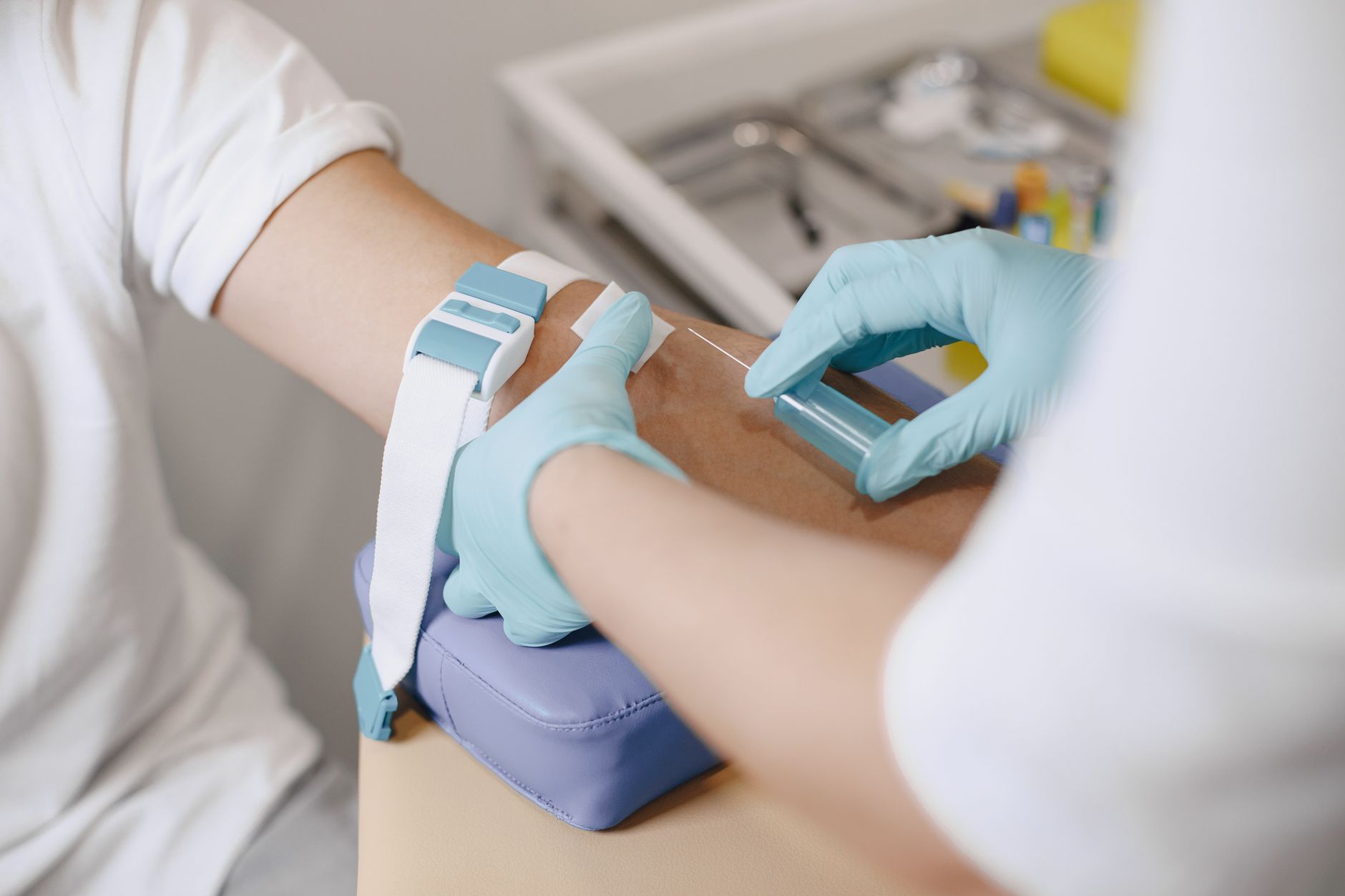
What NHA Phlebotomy Certification Asks of You
The NHA’s Certified Phlebotomy Technician (CPT) is the credential most phlebotomy programs in the U.S. train you for. Of the 800 programs verified on school pages, 243 name the NHA CPT, more than any other exam. Those 243 programs sit at 240 schools in 43 states.
You qualify for NHA phlebotomy certification one of two ways:
- Training route: finish a phlebotomy training program in the last 5 years, and document at least 30 venipunctures and 10 capillary (finger) sticks on live people.
- Work route: 1 year of supervised phlebotomy work in the last 3 years, or 2 years in the last 5, plus the same 30 venipunctures and 10 capillary sticks.
The exam application fee is $134. You renew every 2 years with 10 continuing education credits.
That draw count is the part people miss. A class that ends without 30 live venipunctures leaves you unable to sit the exam, no matter how many hours you spent in a classroom. So the first question for any program on this list is how it gets you those draws, and whether the clinical time is built into the course or something you arrange later.
How NHA CPT Programs Differ in Length, Draws and Price
The 243 programs aren’t one kind of course. They range from a 2-week class to a 40-week program, with a median of 12 weeks among the 138 that state a length. The median program runs 98 hours.
Clinical time varies even more. Of the 82 programs that state clinical hours, the median is 50. But some go far past that:
Prices among the 107 programs that publish one run from $195.55 to $5,500, with a median of $1,750. And 54 programs say the exam fee or a voucher is included.
Programs That Put the NHA Exam Fee in the Price
A low price that leaves out the exam isn’t always the better deal. Here are programs whose published price includes the NHA exam, set beside two that don’t, so you can see what each figure covers.
| School |
Published price |
What it covers |
Clinical time |
Schedule |
| Roxbury Community College, Boston, MA |
Course fee $0.00 (Fall 2026) |
Includes taking the NHA exam |
120-hour externship |
Day |
| Kilgore College, Kilgore, TX |
$875 |
Includes the certification exam; textbook $34 and workbook $15 extra |
Within 200 contact hours |
Tue/Thu 4-9 p.m., Wednesdays online |
| Midland College, Midland, TX |
$1,108 |
Classroom $400, clinical $579, NHA exam $129 |
64 clinical hours |
Evening class, 6-10 p.m. |
| Panola College, Carthage, TX |
$1,388 |
Includes the NHA test fee |
150 clinical hours |
Tuesday evening class |
| BridgeValley Community and Technical College, South Charleston, WV |
$2,000 |
Textbook loan, uniforms, screening and the national exam |
120 clinical hours |
|
| Medina County Career Center, Medina, OH |
$2,400 |
Textbooks, the externship and exam fees |
100-hour externship |
Mon/Wed 5:30-9:30 p.m. |
| Wilkes Community College, Wilkesboro, NC |
$195.55 |
Registration and insurance; textbook $109.95 and screening $90 separate |
104 clinical hours |
Day or evening |
| Jefferson College, Hillsboro, MO |
$425, or $700 with NHA certification |
You choose whether the exam is included |
Clinical hours at a site the college arranges |
Hybrid |
A blank schedule cell means the school lists no class times for that program.
Wilkes is the lowest published price among NHA programs, and it gives you 104 clinical hours. But you add the textbook, screening and the $134 exam fee yourself. Jefferson College makes the trade-off visible: the same course is $425 without the NHA exam and $700 with it.
NHA Phlebotomy Practice Tests and Exam Prep in These Programs
People search for an NHA phlebotomy practice test more than almost anything else about this exam. Some programs build practice exams into the price, which saves you buying prep separately:
- College of the Redwoods in Eureka, California, charges $2,195 and includes books, NHA practice exams, one CPT exam attempt and externship placement. Classes run Monday and Wednesday evenings, 5:30 to 8:30 p.m.
- Northwest Career & Technical Center in St. Albans, Vermont, covers tuition with a grant (the course is valued at $2,175). You pay $349 for the textbook, an online practice exam and the in-person certification exam.
- PAL CNA Training Academy in Little Rock, Arkansas, lists $875 total, which includes a $75 NHA study guide. Its 72 hours split into 48 online theory hours and 24 in-person skills lab hours.
A practice test only tells you whether you know the material. The 30 venipunctures are what make you eligible, so a program with built-in clinical time matters more than one with a bundled study guide.
Pass Rates the Programs Publish
Only a handful of NHA programs publish exam results, and when they do, read the period and who’s counted.
- Lackawanna College in Scranton, Pennsylvania, reports a 100% first-attempt NHA CPT pass rate since 2016 (college-reported). Lackawanna puts the program at about $5,000.
- Pro Med Career Institute in Los Angeles reports a 99% pass rate on the national exam in 2025 (school-reported). Classes run over three weekends, then a 40-hour externship.
- Mayo Clinic College of Medicine and Science reports its 2025-2026 class of 118 had a 100% graduation rate, 100% placement and a 96% first-time certification pass rate. It’s tuition-free for admitted students through a workforce scholarship.
- BridgeValley publishes four years: 78% (2025), 63% (2024), 78% (2023) and 88% (2022). That’s the honest kind of number: it shows the swings from one class to the next.
Who the NHA Route Suits
- You want the fastest route into a job. The NHA’s training route accepts any phlebotomy program, so a short non-credit course with built-in clinical time can get you exam-eligible in weeks. Kilgore’s program runs 12 weeks.
- You work full time. Of the 243 NHA programs, 95 offer evening classes and 22 offer weekend classes. Midland College and Medina County Career Center both hold classes after 5 p.m.
- You want hybrid study. 62 NHA programs teach part of the course online. You still go in person for skills labs and draws.
- You want a hospital lab job. Look at the 27 NHA programs that also name the ASCP PBT, or go straight to the ASCP program ranking. Only 5 of the NHA programs are NAACLS-approved, which is ASCP’s most direct route.
- You live in California. NHA prep alone won’t let you work. California requires its own CPT I, with training from a CDPH-approved California program. Programs such as Modesto Junior College ($4,200, including the NHA exam and a 40-hour externship) prepare you for both. See the California requirements.
How Long and How Hard the Choice Is
A shorter course isn’t automatically worse. A 6-week course like Gadsden State Community College’s 100 hours (65 lecture, 35 clinical, Monday to Thursday, 8 a.m. to 4 p.m.) covers what the NHA requires. But a semester program with 100 or more clinical hours gives you more draws before your first job, and more draws is what makes you steady with a hard stick.
The trade-off is time and schedule. Daytime clinical blocks are common even in evening programs. Wilkes Community College, for example, says evening students must be available 24 daytime hours a week for clinical. If you can’t take daytime hours off, check the clinical schedule before you enroll, not just the class schedule.
How to Choose an NHA CPT Program
- Count the live draws. You need 30 venipunctures and 10 capillary sticks documented. Pick a program whose clinical time is built in, like Panola’s 150 hours or Roxbury’s 120-hour externship.
- Check what the price covers. 54 of the 243 programs include the exam fee or a voucher. Otherwise add the $134 NHA fee yourself.
- Match the schedule, including clinicals. 95 programs run evening classes, but some clinicals are daytime only.
- Look for published results. A pass rate with a year attached, like BridgeValley’s four-year record, tells you more than a promise.
- Check your state. If you live in California, Louisiana, Nevada or Washington, read the state license requirements first.
To see which exam your training and draw count qualify you for, try the certification checker. For everything the four national exams ask, see the phlebotomy certification guide and the venipuncture requirements.
What the NHA CPT Leads to
The CPT is a national credential, not a state license, and it’s the exam more programs prepare you for than any other. Four states were confirmed on official pages to require their own credential as well: California, Louisiana, Nevada and Washington. There the state rule sits on top of the exam, and the NHA appears on the list of accepted certifications in Nevada and Washington.
After you pass, you renew every 2 years with 10 continuing education credits. Hospital, clinic, lab and blood bank jobs all draw on the same skills, and pay by state and setting is laid out in the phlebotomist salary guide. If you later want a hospital lab credential, a year of full-time phlebotomy work opens ASCP’s work-experience route, so the CPT doesn’t lock you out of the PBT later.