Cost Guide
How Much Does Phlebotomy Training Cost?
How Much Does Phlebotomy Training Cost?
Phlebotomy training cost runs from $180 to $11,780 among the 265 programs that publish a price, with a median of $1,450. North Carolina community colleges such as Mayland Community College ($180) list the lowest prices, before fees. Add $119 to $155 for a national exam unless your program includes it; 93 programs say theirs does.
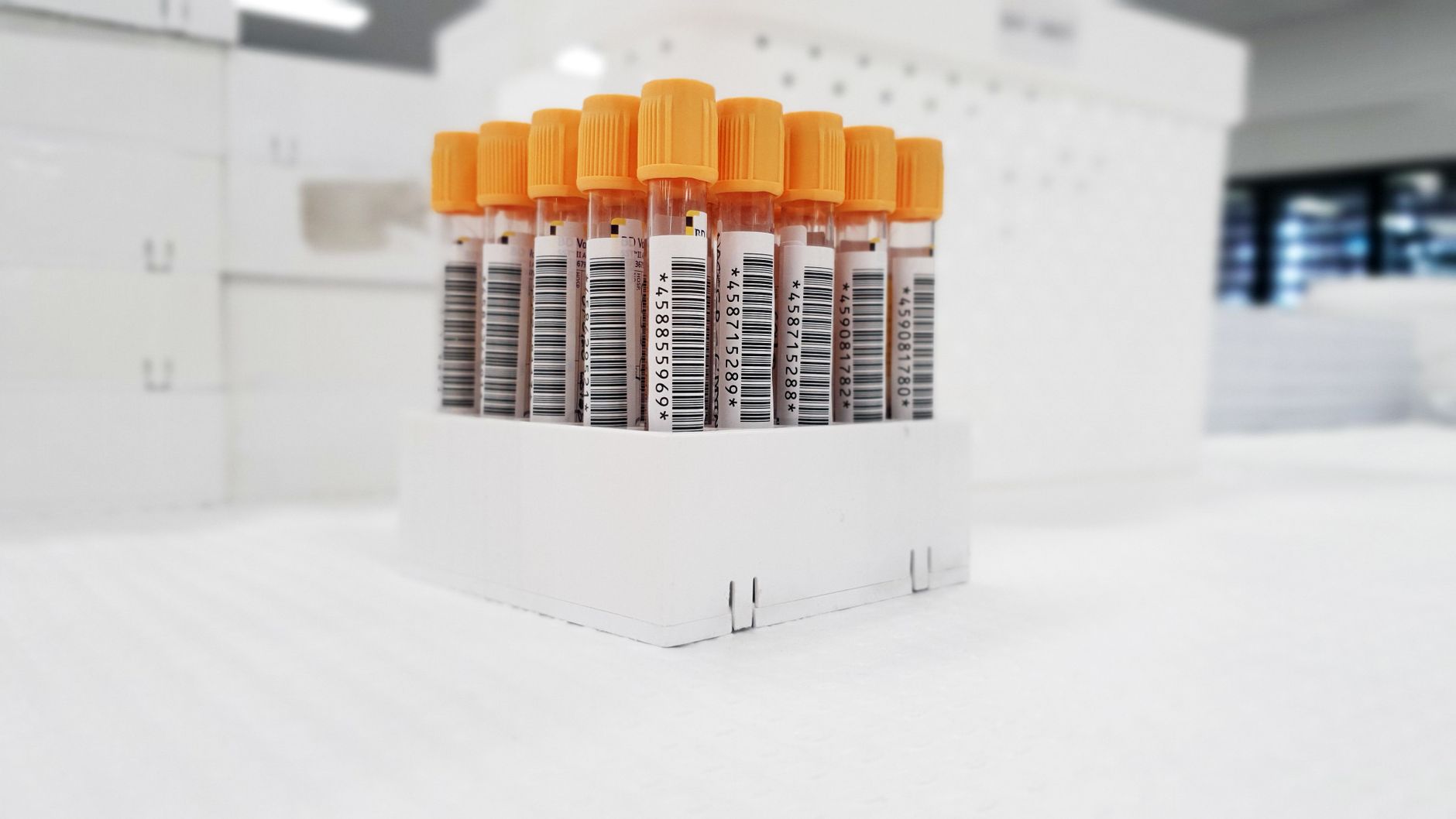
Phlebotomy Training Cost in Numbers
Of the 800 phlebotomy programs verified on school pages, 265 publish a single program price. Those prices run from $180 to $11,780, and the median is $1,450.
That range is wide because “phlebotomy training” covers very different things:
- Non-credit courses at community colleges and technical centers, often a few hundred dollars plus fees.
- Private training schools, often priced in the low thousands for a course that finishes in weeks.
- Credit certificates, billed at the college’s per-credit rate, so there’s often no single program price.
- Combined programs, such as medical assistant with phlebotomy, which cost far more because they train you for a second job.
Every price on this page is the school’s own figure, read on its own page. Fees a school lists separately are kept separate, never added in.
The Lowest Published Phlebotomy Training Prices
North Carolina’s community colleges dominate the low end. Their non-credit phlebotomy courses list a low registration price, with fees and supplies listed on top.
| School | Published price | What’s listed separately | Hours |
|---|---|---|---|
| Mayland Community College, Spruce Pine | $180 tuition (fall 2025) | 220 to 222 hours, 80 clinical | |
| Wayne Community College, Goldsboro | $180 course cost | $16 malpractice insurance and books | |
| Roanoke-Chowan Community College, Ahoskie | $185 course fee | Malpractice $13, technology $5, background check $90, Rotation Manager $36 | 220 hours, 100 clinical |
| Davidson-Davie Community College, Thomasville | $194.50 | 220 hours | |
| Wilkes Community College, Wilkesboro | $195.55 | Background check and drug screen $90, textbook $109.95 | 212 hours, 104 clinical |
| Beaufort County Community College, Washington | $205.25 (Spring 2027) | 248 hours | |
| Caldwell Community College, Hudson | $205 registration | Technology $5, scrubs and shoes $100, badge $2.50, screening $100.75, ASPT exam $90 | |
| Robeson Community College, Lumberton | $212.60 class cost | Drug and background check $100, textbook $155.78 | 132 class hours, 126 clinical |
Blank cells mean the school’s page lists no figure for that column.
Caldwell shows why the fee column matters. Its registration is $205, and it lists five more costs on the same page, including scrubs and the exam. Still, these courses come with real clinical time: Roanoke-Chowan requires 100 clinical hours and Robeson gives you 126.
The Highest Phlebotomy Training Prices and Why
At the top of the range, the price usually buys something beyond a phlebotomy course:
- Campus (formerly MTI College) in Sacramento lists $11,780 for a Medical Assistant with Phlebotomy certificate that runs as few as 72 weeks, with a 160-hour medical assisting externship and a 40-hour phlebotomy externship.
- Downey Adult School in California lists $5,999, including books, for a 700-hour Medical Assistant Specialist program with phlebotomy and CPT 1.
- Gifted Hands Academy in Hammond, Indiana, lists $5,500 all-inclusive for an 8-week, 64-hour program with books, scrubs, the NHA exam and CPR.
- Kaiser Permanente School of Allied Health Sciences in Richmond, California, lists tuition and fees of $4,700 plus $731 for books and clothing, for a 9-week program with 160 clinical hours at Kaiser facilities.
The first two are combined medical assistant programs, so you’re paying for two careers. Kaiser’s price buys a lot of clinical time. When you see a high price, check which of those you’re getting.
What a Phlebotomy Program Price Includes
Two programs with the same price can leave you with very different bills. Read the price line for these items:
- The exam fee or voucher. 93 programs say it’s included. Bevill State Community College in Alabama charges $1,025 covering the class fee, textbook, background check, drug screen, insurance, badge, CPR card, scrubs and the ASPT exam.
- The clinical rotation. Calhoun Community College in Huntsville lists its course at $799, but the 1- or 2-week clinical rotation is optional and costs $249, and it requires 100 documented draws to sit its exam.
- Textbooks and supplies. PAL CNA Training Academy in Little Rock lists $875 total: $650 tuition (including a $100 registration fee), $90 books, $60 supply kit and a $75 NHA study guide.
- Screening and compliance. Background checks, drug screens, immunizations and document trackers are often extra.
National Exam Fees to Add
If your program doesn’t include the exam, add one of these:
| Exam | Fee | What it covers |
|---|---|---|
| NCCT NCPT | $119 | Exam fee |
| AMT RPT | $125 | Application, exam and first annual fee |
| NHA CPT | $134 | Exam application fee |
| ASCP PBT | $155 | Application fee |
Schools sometimes list their own figure. Nash Community College collects a $145 ASCP exam fee at registration, part of its $341.25 total with $180 tuition and $16.25 in fees. If you’re in California, the CDPH application for CPT I is another $100.
Phlebotomy Training Cost by Program and School Type
| Group | Programs priced | Lowest | Median | Highest |
|---|---|---|---|---|
| Non-credit courses | 228 | $180 | $1,450 | $5,999 |
| Credit certificates | 37 | $300 | $1,427 | $11,780 |
| Public colleges | 167 | $180 | $1,499 | $5,999 |
| Private for-profit schools | 7 | $1,500 | $2,600 | $11,780 |
| Exam fee included | 68 | $349 | $1,500 | $5,500 |
| Every program | 265 | $180 | $1,450 | $11,780 |
Published program prices for 265 of the 800 programs, read November 2026. Fees the school lists separately are not added, and per-credit rates are not multiplied out.
The Lowest Published Phlebotomy Training Prices
- Wayne Community College phlebotomy course at $180Goldsboro, NC
- Mayland Community College phlebotomy course at $180Spruce Pine, NC · 2025
- Pamlico Community College phlebotomy course at $180.55Grantsboro, NC · 2026-27
- Isothermal Community College phlebotomy course at $185Spindale, NC · 14 weeks · 2026
- Roanoke-Chowan Community College phlebotomy course at $185Ahoskie, NC
- Davidson-Davie Community College phlebotomy course at $194.50Thomasville, NC · 19 weeks · 2026-27
- Wilkes Community College phlebotomy course at $195.55Wilkesboro, NC
- High Plains Technology Center phlebotomy course at $200Woodward, OK · 2026-27
- Edgecombe Community College phlebotomy course at $201.50Tarboro, NC
- Caldwell Community College and Technical Institute phlebotomy course at $205Hudson, NC
Certification Exam Fees You Add
| Exam | Fee | What it covers |
|---|---|---|
| NHA CPT fee at National Healthcareer Association | $134 | exam application fee |
| ASCP PBT fee at ASCP Board of Certification | $155 | application fee |
| AMT RPT fee at American Medical Technologists | $125 | covers the application, the exam and the first annual fee |
| NCCT NCPT fee at National Center for Competency Testing | $119 | exam fee |
As each certifying body's page lists it, read 2026-11-13. 93 programs say their price already includes the exam fee or a voucher.
Programs That Charge No Tuition or Pay You to Train
A few programs remove tuition altogether:
- Mayo Clinic College of Medicine and Science is tuition-free for admitted students through its workforce development scholarship. It reports a 96% first-time certification pass rate and 100% placement for its 2025-2026 class of 118.
- Geisinger School of Phlebotomy in Danville, Pennsylvania, employs accepted students during the 12-week training. It reports a 100% ASCP pass rate and 92% placement for July 2024 to June 2025.
These are competitive programs with admission steps. But if you’re near one, they’re worth applying to first.
The Cost You Don’t See on the Price Line: Time Off
The biggest cost of a low-priced course is often the clinical schedule. Clinical rotations run during the day at hospitals and clinics, and you can’t work your usual job during them.
- Edgecombe Community College in North Carolina lists $201.50, with textbooks, uniforms and screening extra. Its clinical rotation runs in 13-day blocks, 8 a.m. to 5 p.m., Monday to Friday, with some Wednesdays from 11 a.m. to 8 p.m.
- Wilkes Community College runs day and evening classes, but says evening students must be available 24 daytime hours a week for clinical.
- Kaiser Permanente’s 9-week program spends weeks 5 to 8 in full-time clinical rotation.
If you’d lose wages during those weeks, count them when you compare. A $200 course with three weeks of unpaid daytime clinicals can cost you more in practice than a pricier evening program whose clinical hours you can fit around work. The evening and weekend ranking lists programs built for working adults.
Why Two Similar Programs Cost Different Amounts
Look closely at two programs with similar hours and you’ll often find the price difference has a reason:
- One includes the exam and the other doesn’t. Bevill State’s $1,025 covers the ASPT exam; Calhoun’s $799 doesn’t, until you add the $249 rotation.
- One is public and one is private. Public community colleges make up most of the low end of the price range.
- One bills per hour or credit. Lively Technical College in Tallahassee lists a Florida resident total of $810.80 for 165 clock hours, built from tuition of $481.80 ($2.92 an hour) plus bookstore, registration, facility, lab, screening and insurance fees. That itemized list is exactly what you want to see.
Who Each Price Level Suits
- Tightest budget: a North Carolina-style non-credit course, budgeting the separate fees.
- Want one bill: a program that includes the exam, like Bevill State, or an all-inclusive price.
- Want the most clinical time for the money: compare clinical hours, not just prices. Wilkes gives you 104 clinical hours for $195.55.
- Need financial aid: a credit certificate billed per credit. Many short non-credit courses aren’t aid-eligible; Lackawanna College, for one, says its program isn’t but WIOA funding may help.
How to Compare Phlebotomy Training Costs
- Read the full price line, including what’s listed separately.
- Add the exam fee if it isn’t included.
- Check the clinical rotation is in the price, not an add-on.
- Count the hours you get for the price, especially clinical hours.
- Weigh it against pay: the phlebotomist salary guide has the federal pay figures by state.
The school cost comparer lines up prices side by side, the affordable program ranking lists the lowest-cost options, and how long phlebotomy training takes covers the time side of the trade-off.
Frequently Asked Questions
What Is the Least Expensive Way to Get Phlebotomy Training?
A non-credit course at a community college. Several North Carolina colleges list prices under $200, including Mayland ($180), Roanoke-Chowan ($185) and Davidson-Davie ($194.50). Fees such as background checks and textbooks are usually extra.
How Much Is the Phlebotomy Certification Exam?
NCCT lists $119, AMT $125 (including the first annual fee), the NHA $134 and ASCP $155. Some programs include the exam in the price.
Can You Get Phlebotomy Training Without Paying Tuition?
Some programs charge no tuition. Mayo Clinic College of Medicine and Science is tuition-free for admitted students through a workforce scholarship, and students accepted to the Geisinger School of Phlebotomy in Pennsylvania are employed by Geisinger during training.
Can You Use Financial Aid for Phlebotomy Training?
Often not for short courses. Lackawanna College says its program isn't eligible for financial aid but WIOA funding is available to those who qualify. Credit certificates at community colleges are billed per credit, which can make aid easier to apply.
What Extra Costs Come With Phlebotomy Training?
Common extras are a background check and drug screen, textbooks, scrubs, immunizations and CPR. Wilkes Community College lists a $90 background check and drug screen and a $109.95 textbook on top of its $195.55 price.
Why Do Some Phlebotomy Programs Cost Over $5,000?
Most are combined programs that train you for a second job, such as Downey Adult School's $5,999 Medical Assistant Specialist program with phlebotomy. Others bundle a lot of clinical time, like Kaiser Permanente's 160 clinical hours.
Keep Reading
- How to Become a PhlebotomistThe training program, supervised blood draws, national exam and state rules that take you from no experience to a phlebotomy job
- Phlebotomy CertificationThe four national phlebotomy exams side by side: who can sit each one, the live-draw counts and hours they ask for, fees, renewal and which programs prepare you
- How Long Training TakesHow many weeks, classroom hours and clinical hours phlebotomy programs take, from programs checked on schools' own pages
- Best Phlebotomy ProgramsEvery verified program, ranked
- Phlebotomy License Requirements by StateThe four states that require a state credential
Sources
- NHA: Certified Phlebotomy Technician (CPT)
- ASCP Board of Certification: Phlebotomy Technician (PBT)
- AMT: Registered Phlebotomy Technician (RPT)
- NCCT: Phlebotomy Technician (NCPT)
- BLS OEWS May 2025: Phlebotomists (31-9097)
- National Healthcareer Association (NHA): Certified Phlebotomy Technician (CPT) eligibility, read 2026-11-13
- ASCP Board of Certification: Phlebotomy Technician, PBT(ASCP) eligibility, read 2026-11-13
- American Medical Technologists (AMT): Registered Phlebotomy Technician (RPT) eligibility, read 2026-11-13
- National Center for Competency Testing (NCCT): National Certified Phlebotomy Technician (NCPT) eligibility, read 2026-11-13
- Federal Student Aid: applying for aid