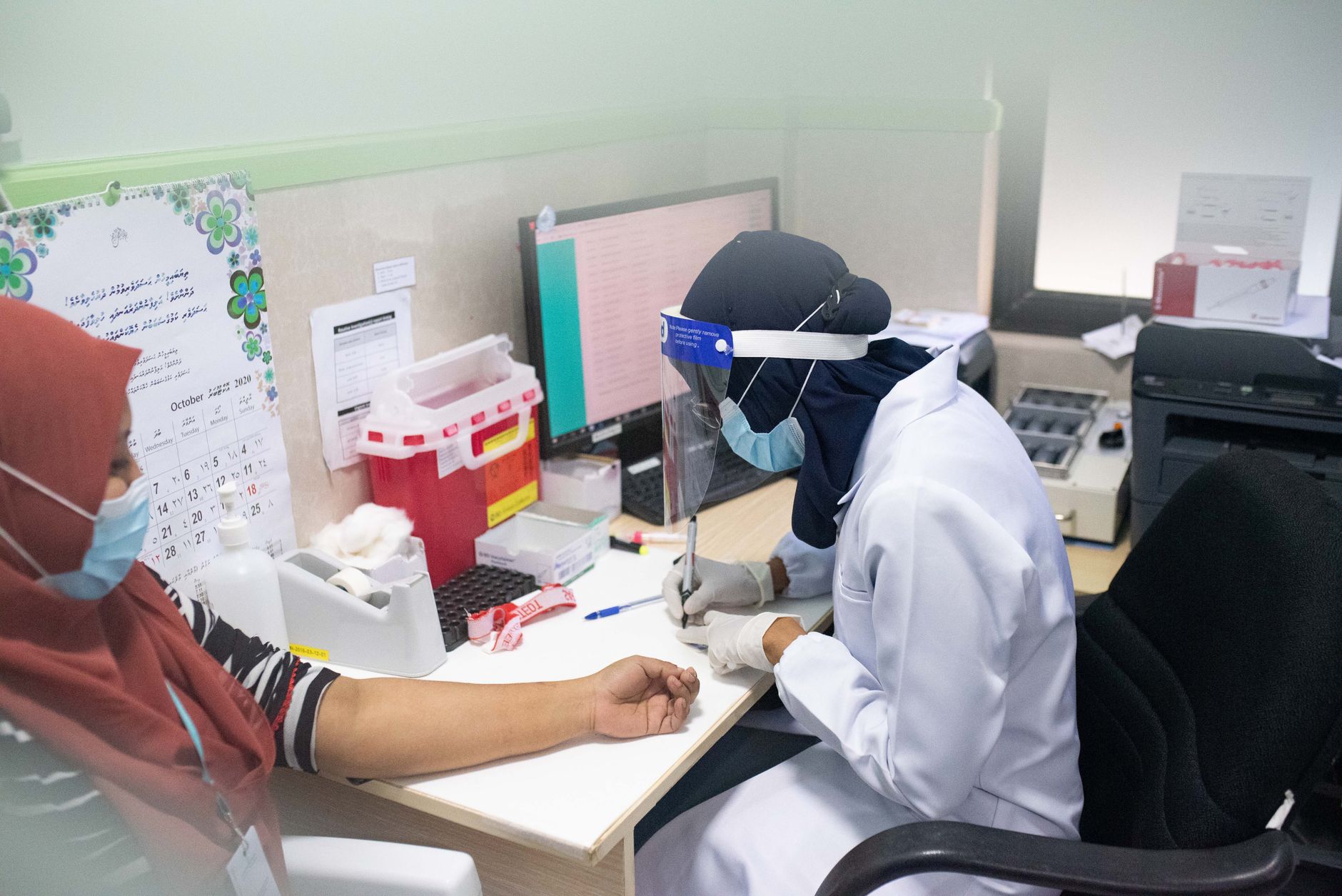
How the Best Phlebotomy Programs Were Picked
Every program on this page was read on the school’s own website in November 2026: 800 programs at 761 schools, in all 50 states and Washington, D.C. Each one gets a score out of 100 built from five parts, and you can see every weight in the scoring table above.
- Published outcomes (30 points): a certification pass rate, completion rate or job placement rate the school reports, with its period.
- Hands-on training (25 points): clinical or externship hours and required live venipunctures.
- Published cost (20 points): the school’s own price for the program.
- Certification readiness (15 points): a named national exam, an included exam fee, NAACLS approval or a state approval.
- Federal track record (10 points): IPEDS phlebotomy awards in 2022-23.
When a program has no figure for a part, that part drops out and the rest are rescaled. A program needs figures for at least two parts to be scored at all. That rule keeps a school with one strong number from outranking schools that show you more.
What Separates the Top Ten
Clinical time is the clearest dividing line. Every program in the top ten builds in supervised work at a hospital, lab or clinic, and most of them give you far more than the 100-hour median among the 225 programs that state their clinical hours.
- Bates Technical College in Tacoma puts you in a clinical setting for 120 hours, weekdays 7:30 a.m. to 5 p.m. It also conferred 132 phlebotomy awards in 2022-23, so the program has a long federal track record.
- GateWay Community College in Phoenix runs a 300-clock-hour Certificate of Competency with a 120-clock-hour practicum. Tuition is $5 per clock hour for 2026-27.
- Arapahoe Community College near Denver packs a 120-hour clinical internship into 3 consecutive weeks, 8 hours a day, inside a 15-week, 7-credit certificate.
- Massachusetts Bay Community College ties for the longest placement in the top ten: a 160-hour capstone at a clinical partner site, after a hybrid summer course.
- Wilson Community College in North Carolina is the value pick of the group. Its published price is $348 for 2026, and it requires 100 successful sticks.
Lower in the top ten, Erie 1 BOCES runs its 200-hour program on Tuesday to Thursday evenings with a 125-hour unpaid internship, and National Career Education in Citrus Heights, California, folds phlebotomy into a 720-clock-hour lab assistant and EKG diploma with a 160-hour externship.
Top Programs Side by Side
| Program |
Where |
Clinical time |
Published cost |
Why it ranks |
| Bates Technical College, Advanced Phlebotomy |
Tacoma, WA |
120 hours |
|
132 awards in 2022-23 |
| GateWay CC, Clinical Phlebotomy CCT |
Phoenix, AZ |
120 clock hours |
$5 per clock hour (2026-27) |
300-hour program, 91 awards |
| Arapahoe CC, Phlebotomy Certificate |
Littleton, CO |
120 hours in 3 weeks |
|
15 weeks start to finish |
| MassBay CC, Phlebotomy Skills Certificate |
Wellesley Hills, MA |
160-hour capstone |
|
Hybrid summer coursework |
| Wilson CC, Short-Term Training |
Wilson, NC |
40 hours, 100 sticks |
$348 (2026) |
Low price, high stick count |
| Erie 1 BOCES, Phlebotomy |
West Seneca, NY |
125-hour internship |
$3,250 (2026-27) |
Evening classes |
| Bucks County CC, Certificate 3166 |
Newtown, PA |
120-hour externship, 100 sticks |
|
Credit certificate |
| St. Charles CC, Phlebotomy Program |
Cottleville, MO |
120 hours |
$775 (2027) |
Online coursework, 2 lab days |
| Arkansas Northeastern College, CP |
Blytheville, AR |
120-hour practicum |
$75 per credit (2023-24) |
16 weeks |
| National Career Education, diploma |
Citrus Heights, CA |
160-hour externship |
|
First NCCT attempt paid |
A blank cost cell means the school states no single program price.
Where the Ranked Programs Are
Phlebotomy training is spread unevenly. North Carolina has the most ranked programs (61), followed by California (58), Texas (57), Ohio (53) and Florida (37). At the other end, Delaware, North Dakota, Hawaii, Rhode Island and Washington, D.C., each have one or two.
Most of the list is public: 559 programs run at public colleges, technical centers and adult schools. That matters for price, because public non-credit courses make up nearly all of the lowest published prices, while the highest prices come mostly from California programs built around the state CPT I certificate.
If your state has only a handful of programs, two options open up. You can look at hybrid programs (137 of them), where the coursework is online and only the lab days and clinical rotation are in person. Or you can check the state ranking for your neighbors, since a clinical site within driving distance is what you actually need. Each state ranking, such as Ohio’s or Texas’s, lists every verified program in that state with its hours, cost and exam.
Short Course or Semester Certificate?
You’ll see two kinds of phlebotomy training in this ranking, and they suit different people.
Non-credit courses (411 programs) run through continuing education or workforce offices. They’re short and low-cost. Mayland Community College in North Carolina lists a 222-hour course with 80 clinical hours for $180, and Isothermal Community College lists 225 hours over about 14 weeks for $185. North Carolina’s community colleges dominate the low end of the price list.
Credit certificates (342 programs) sit on a college transcript and are charged at the college’s per-credit tuition. They usually take a semester or two and give you longer clinicals. Westmoreland County Community College in Pennsylvania runs a 16-credit certificate with a 224-hour practicum, and it costs $143 per credit in-county.
The trade-off is simple. A short course gets you to the exam faster and for less money. A semester certificate gives you more supervised draws before your first job, and those hours matter when you apply to hospital labs.
Which Exam Each Program Prepares You for
436 of the 800 programs name a national exam. The NHA CPT leads (243 programs), followed by the ASCP PBT (145), the AMT RPT (50) and the NCCT NCPT (35). Some schools name a smaller body such as ASPT or NPA instead.
Your exam route sets the minimum number of live draws you need:
- NHA CPT: a training program in the last 5 years plus 30 venipunctures and 10 capillary sticks.
- AMT RPT: a course of at least 120 classroom hours (or a NAACLS program) plus 50 venipunctures and 10 skin punctures.
- ASCP PBT: a NAACLS-approved program, or 40 classroom hours plus 100 successful unaided venipunctures.
If you want a hospital lab job, look at programs that prepare you for the ASCP route, such as Roanoke-Chowan Community College, which has 100 required clinical hours and a $185 course fee. The certification guide compares all four exams, and the certification checker tells you which ones your training qualifies you for.
If You Live in California, Louisiana, Nevada or Washington
Four states were confirmed on official pages to require a state phlebotomy credential: California, Louisiana, Nevada and Washington. California is the strictest. A CPT I certificate needs 40 classroom hours and 40 clinical hours from a CDPH-approved program, 50 venipunctures and 10 skin punctures, plus a national exam. Programs outside California don’t count.
That’s why California programs cost more. Kaiser Permanente School of Allied Health Sciences lists $4,700 in tuition and fees for a 9-week program with 160 clinical hours, and Modesto Junior College charges $4,200 for its fee-based CPT I program with the NHA exam included. See the state license requirements before you enroll anywhere else.
Published Pass Rates Worth Knowing
Only 24 programs publish outcomes, so a reported rate is a real signal. Lackawanna College reports a 100% first-attempt NHA CPT pass rate since 2016. Columbus State Community College reports 100% certification, completion and placement for 2024-25. Bossier Parish Community College in Louisiana reports a 100% ASCP pass rate, 98% completion and 95% placement for 2025.
Read completion rates as closely as pass rates. Nash Community College reports a 100% certification pass rate but 73.3% program completion for 2024-25, so about a quarter of students didn’t finish. The pass rate ranking lists every program that publishes these numbers.
How to Choose From This List
Use the ranking as a shortlist, then check these points against your situation:
- Clinical hours. Look for a stated number. The median among programs that state one is 100 hours, and the top ten all meet or beat 120 except Wilson’s 40-hour rotation with 100 required sticks.
- Draw count against your exam. A program that guarantees 100 sticks covers every national exam’s minimum, including the ASCP’s unaided route.
- What the price covers. Wayne Community College’s $180 leaves out a $16 malpractice fee and books. Bevill State Community College’s $1,025 covers the textbook, background check, scrubs and the ASPT exam.
- Schedule. 239 programs offer evening classes and 64 offer weekend sessions, but many clinical rotations still run on weekday daytime hours.
- Your state. In California, only a CDPH-approved program leads to the CPT I.
You can filter the full list by state, cost and format with the program finder, or compare prices line by line with the cost comparer. If price is your first filter, start with the most affordable phlebotomy programs. If you need to keep your day job, the evening and weekend classes ranking sorts by schedule.