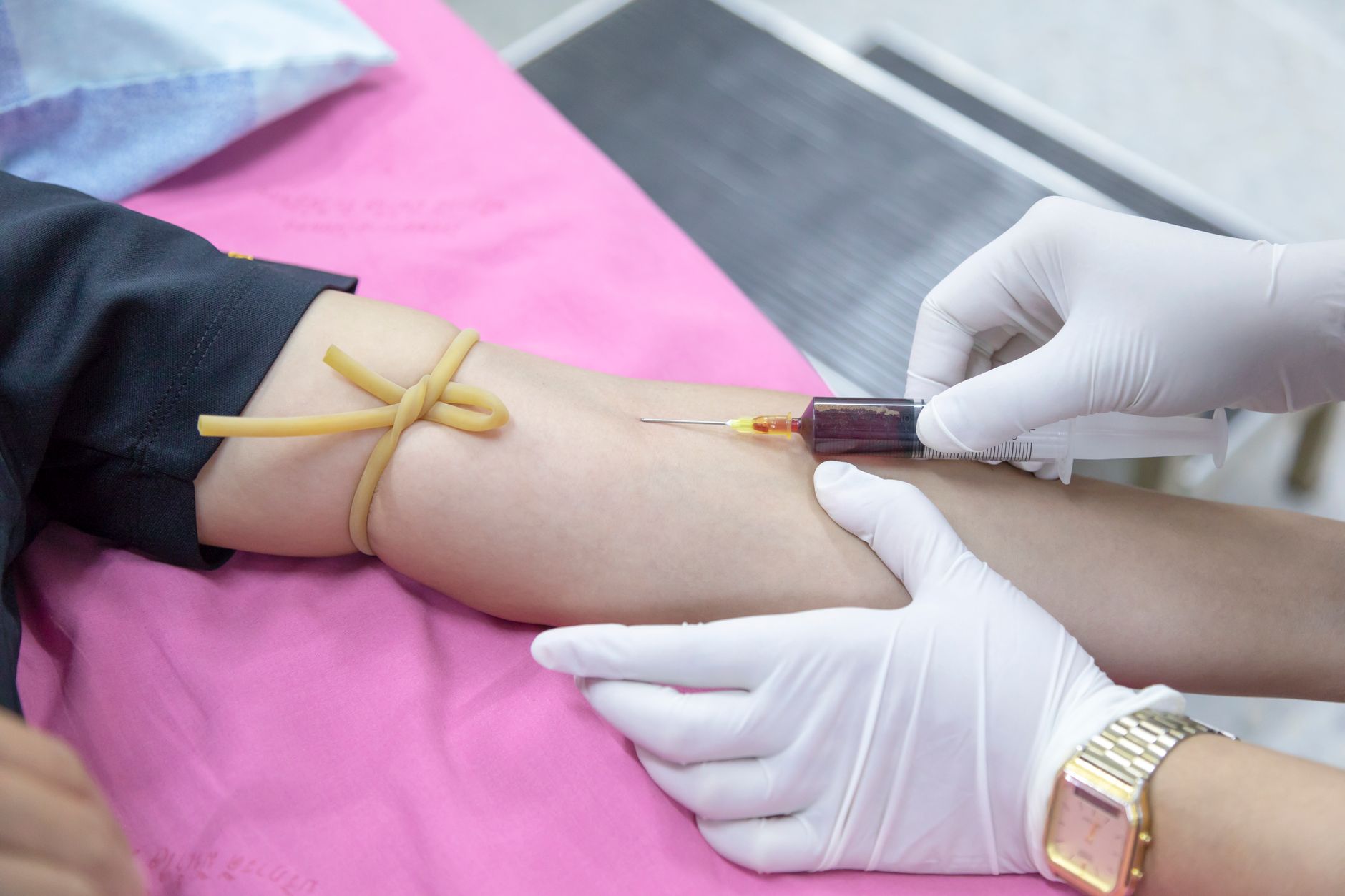
What Counts as an Accelerated Phlebotomy Program
This ranking sorts programs by the shortest length their own pages state. To make the list, a program has to name a national exam or include clinical practice, so every course on it leads somewhere. Two-day courses are left out because they can’t give you the draws an exam asks for.
362 programs at 357 schools state a length. They run from 2 weeks to 80 weeks, and the median is 15 weeks. That median is about the length of one college semester.
An accelerated program squeezes the classroom part. The draws still take time. That’s the trade-off to keep in mind as you read the list.
The Fastest Phlebotomy Courses
- Tennessee College of Applied Technology-Knoxville runs 49-hour sections in about two weeks, such as December 7 to 16, 2026, from 2 to 10 p.m. You practice live sticks on classmates, and you qualify for the NHA exam. Tuition is $371, plus $71 for books.
- Blue Haven Career College in Los Angeles runs a 10-day class plus a separately scheduled 40-hour externship, 80 hours in all, for $995. Day, evening and weekend sections are listed.
- Northeast Medical Institute in Stamford, Connecticut, runs 80 hours in 2 weeks by day or 4 weeks in the evening, with the NHA exam on site.
- Los Angeles Career College runs 2 weeks of CDPH-approved training (40 didactic and 40 lab hours) plus a 40-hour externship with 50 required sticks.
- Allied Health Careers Institute in Murfreesboro runs 2.5 weeks, Monday to Friday 9 a.m. to 3 p.m., then an externship of 40 hours or 100 venipunctures.
- Ohio State Career Training Center in Dayton runs a 3-week hybrid with 6 in-person days, 9 a.m. to 1 p.m., and NHA exam eligibility.
Fast Programs Compared
| Program |
Length |
Hours |
Clinical |
Published cost |
| TCAT Knoxville |
About 2 weeks |
49 |
Live sticks on classmates |
$371 (2026-27) |
| Blue Haven Career College |
10-day class |
80 |
40-hour externship |
$995 (2026) |
| Northeast Medical Institute |
2 or 4 weeks |
80 |
Campus lab days |
$1,200 |
| Los Angeles Career College |
2 weeks |
80 |
40 hours, 50 sticks |
$2,000 (2026) |
| Allied Health Careers Institute |
2.5 weeks |
75 |
40 hours or 100 sticks |
|
| Ohio State Career Training Center |
3 weeks |
|
6 in-person days |
|
| Pro Med Career Institute |
3 weekends |
88 |
40 hours, 50 sticks |
$2,100 |
| Healthcare Career College |
6 Saturdays |
|
Externship, 50 sticks |
|
| Geisinger School of Phlebotomy |
12 weeks |
|
Hospital and mobile team |
Students employed during training |
Blank cells mean the school’s page states no figure for that column.
Read the Entry Rules Before You Enroll
Some short programs are short because they expect you to arrive with experience. Regional Center for Border Health in Somerton, Arizona, runs a 2-week, 40-clock-hour course with 10 externship hours, but its entry rule asks for prior training or a year of experience including at least 30 venipunctures. It’s a fast route to the NHA exam for people who already draw blood, not a start from zero.
Weekend formats can be fast too. Pro Med Career Institute in Los Angeles runs its classroom hours over three consecutive Saturday and Sunday weekends, then a 40-hour weekday externship. It lists $2,100 in its FAQ and $2,200 on its course listing, and it reports a 99% national exam pass rate for 2025. The NHA fee of $125 to $130 is paid to NHA separately. Healthcare Career College in Paramount, California, runs 6 Saturdays with an externship and 50 required sticks.
Speed vs. Draw Count
Here’s the honest trade-off. A 2-week course gets you to the NHA exam, whose training route asks for 30 venipunctures and 10 capillary sticks. It may not get you anywhere near the other exams.
- AMT RPT asks for a course of at least 120 classroom hours (or a NAACLS program), plus 50 venipunctures and 10 skin punctures. TCAT Knoxville’s 49 hours and Blue Haven’s 80 hours fall short of the 120-hour course route.
- ASCP PBT asks, on its training route, for 40 classroom hours plus at least 100 successful unaided venipunctures. Few 2-week courses build in that many.
- California CPT I asks for 40 classroom hours and 40 clinical hours in a CDPH-approved program, plus 50 venipunctures and 10 skin punctures. The Los Angeles fast programs are built right at that line.
Among the 48 accelerated programs that state a stick count, the median is 100. Those tend to be the semester-length programs, not the 2-week ones. If you want a hospital lab job, a slightly longer program with a full rotation often pays off. The venipuncture requirements guide has each exam’s counts.
Fast Programs With Long Rotations
You don’t have to pick between fast and thorough. Several programs finish in about 3 months or one semester and still give you 120 hours or more of clinical time.
Pass Rates Among Faster Programs
16 programs in this set publish outcomes, and their median pass rate is 99%. Apart from Pro Med and Geisinger, most of the programs that report rates run a semester or longer with a long rotation.
- SUNY Orange in Middletown, New York, runs a 15-week, 210-hour course with clinical placements from week 4. It reports a 100% ASCP pass rate for 2023-2025 and 90% completion, for about $1,970 including tuition, lab and technology fees and insurance.
- Bossier Parish Community College in Louisiana reports a 100% ASCP pass rate, 98% completion and 95% placement for 2025, and includes the $135 exam fee in tuition.
- Nash Community College reports a 100% pass rate for 2024-25, but 73.3% completion. Its 8-week theory block runs three mornings a week, followed by 128 hours of unpaid clinical experience.
Completion is the number to watch in fast programs. A compressed schedule leaves little room to catch up after a missed week.
Fast and Low-Cost Options
114 accelerated programs publish a price, with a median of $1,500. The least expensive ones are North Carolina continuing education courses that run about one semester. Isothermal Community College lists $185 for about 14 weeks and 225 hours. Gaston College lists $250 tuition for a 16-week course: 8 weeks of lecture and lab, then 8 weeks of clinical rotation with a 122-hour externship and 75 required sticks. Its page lists extras beside the tuition, including $207 for uniforms and $120 for the exam.
Randolph Community College in Asheboro starts with two weeks of online lecture, moves to Monday to Thursday evening classes from 5:30 to 8 p.m., then sends you to weekday clinicals, for $227.05 in tuition and insurance.
Is a Fast-Track Program Right for You?
An accelerated program suits you if:
- You already work in healthcare as a CNA or medical assistant and need the phlebotomy credential added fast.
- You can take two to four weeks off. Most fast courses run daily, and the externship runs on weekdays.
- You plan to take the NHA CPT, the exam with the lowest draw count.
A longer program suits you better if you want the ASCP credential, if you’ve never worked with patients, or if you need to keep a full-time job. In that last case, look at the evening and weekend classes first.
How to Choose a Fast Phlebotomy Course
- Confirm the externship is included. Blue Haven schedules its 40-hour externship separately from the 10-day class.
- Count the guaranteed sticks. Look for a stated number that meets your exam.
- Check the entry rules. Some 2-week courses expect prior experience.
- Check whether the exam fee is included. Los Angeles Career College’s page says the NHA fee is not included.
- Check your state. California only accepts CDPH-approved training, and three other states have their own rules. See the license requirements.
The how long is phlebotomy training guide breaks down typical lengths by program type. The certification checker shows which exams a short course qualifies you for, and the full best phlebotomy programs ranking sorts by overall score instead of speed.