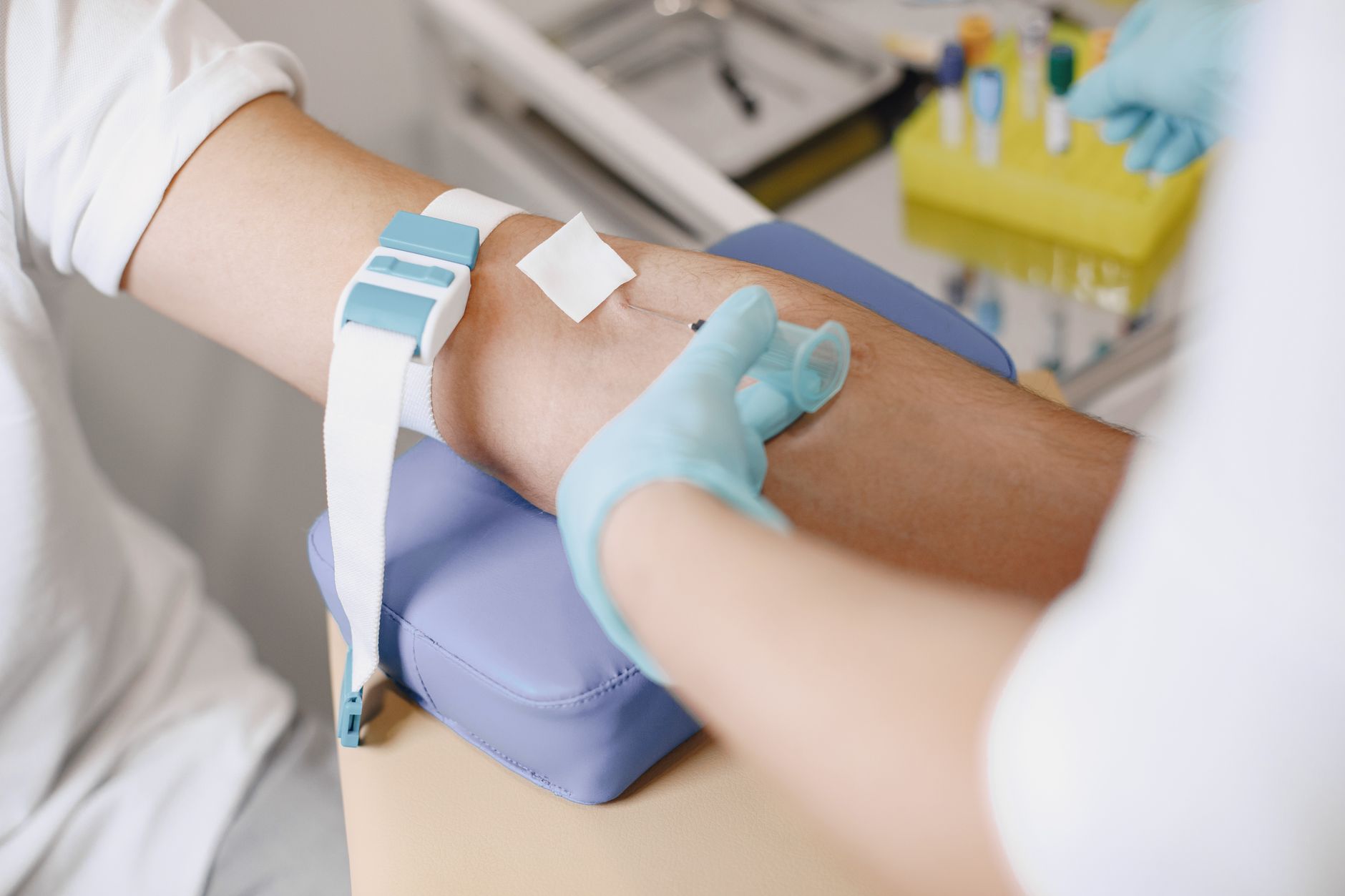
Why the Stick Count Matters More Than the Hours
Clinical hours tell you how long you’ll spend at a hospital or lab. The stick count tells you how many times you’ll actually put a needle in a vein and get a usable sample. That second number is what the certifying bodies ask you to document, and it’s what makes you employable on day one.
99 programs at 98 schools in 33 states state a required number of successful venipunctures on their own pages. This ranking puts the highest requirement first. Ties go to the program with the higher overall score, and each school appears once. Because so many programs sit at exactly 100, the overall score decides most of the order.
The median stated count is 50, but 40 programs require 100 or more. Those 40 are the ones to look at if you want a hospital lab job or the ASCP credential, and the top ten below are the 100-stick programs with the highest overall scores.
Phlebotomy Venipuncture Requirements by Exam
Each national exam and California’s state certificate set a floor. Here’s how they compare with what the top programs require.
| Credential |
Venipunctures required |
Other draws |
| NHA CPT |
30 |
10 capillary sticks |
| AMT RPT |
50 |
10 skin punctures |
| California CPT I |
50 |
10 skin punctures, observe arterial punctures |
| ASCP PBT (training route) |
100 successful unaided |
With 40 classroom hours |
| FranU program |
125 |
|
| Programs ranked 2 to 10 |
100 each |
|
A program at 100 sticks covers every credential in the table. A program at 50 covers the NHA, AMT and California floors but not the ASCP’s training route. A program at 30 covers only the NHA. The ASCP’s other route, a NAACLS-approved program, doesn’t set a draw count of its own, and only 2 programs on this page are NAACLS-approved.
The Programs That Require the Most Sticks
- FranU (Franciscan Missionaries) in Baton Rouge requires 125 successful venipunctures. You do 8 weeks of classroom and lab in the evening, 4:30 to 8 p.m. three days a week, then 3 weeks of daytime clinical practice, and you’re eligible for the ASCP PBT. It lists $3,304.76, plus about $160 for books and a uniform.
- Hagerstown Community College in Maryland runs seven weeks on campus, then a 100-hour clinical externship with 100 required sticks.
- Mercy College of Ohio in Toledo runs a five-week non-credit certificate with 100 hours of supervised clinical practice and 100 sticks.
- Rutgers School of Health Professions in Newark runs evening lectures from October 6 to November 24, 2026 (Tuesday and Thursday, 6 to 9 p.m.), lab from December 1 to 10, then a 100-hour clinical rotation over 12 to 13 weekdays, with 100 sticks. The program fee is $1,600, plus a $25 application fee, a $106.90 background check and about $112 for the textbook.
- Wilson Community College requires 100 sticks in a 40-hour weekday clinical, for a published price of $348 (2026). It has the highest overall score in this group.
- Lackawanna College in Scranton requires 100 sticks with 190 class and lab hours and reports a 100% first-attempt NHA CPT pass rate since 2016. It lists $5,000.
Monroe 2-Orleans BOCES in Rochester, Olney Central College in Illinois, Bucks County Community College and the NAACLS-approved Harcum College also require 100.
100 Sticks on a Short or Part-Time Schedule
You don’t need a two-semester certificate to reach 100 sticks. Several programs fit them into a few weeks or into evenings and weekends.
- Fastest: Mercy College of Ohio reaches 100 in five weeks. Allied Health Careers Institute in Murfreesboro runs 2.5 weeks of daytime classes, then an externship that ends at 40 hours or 100 venipunctures.
- Evenings: Rutgers holds its lectures on Tuesday and Thursday evenings before the weekday clinical, and FranU’s classroom weeks run 4:30 to 8 p.m.
- Weekends: Calhoun Community College in Huntsville, Alabama, runs 9 weeks of 2-hour Saturday sessions for $799 and lists 100 sticks. Its clinical rotation is an optional add-on for $249, which covers one ASPT exam attempt.
The catch is the clinical part. Rutgers and FranU both finish with a weekday daytime rotation, so even an evening program needs a block of daytime hours at the end.
Sticks vs. Price
A high stick count doesn’t have to cost more. Among the 45 programs that state a count and a price, the median is $1,199 and the range runs from $250 to $4,200.
- Gaston College in North Carolina lists $250 tuition for a 16-week course with a 122-hour externship and 75 required sticks. Its page lists extras beside the tuition, including $207 for uniforms and $120 for the exam.
- Red River Technology Center in Duncan, Oklahoma, lists $370 for 48 hours on Tuesday and Thursday evenings, with 50 sticks.
- Piedmont Community College in Roxboro lists $537.20 at registration for spring 2027, with 80 clinical hours and 80 sticks. The NHA exam fee of $134 is paid to NHA.
- Canadian Valley Technology Center in Chickasha, Oklahoma, lists $594 for a 60-hour course with a flexible start, but requires only 25 sticks.
Canadian Valley is a useful warning. A program can be quick and inexpensive and still leave you below the 30 venipunctures the NHA asks for, so you’d need more draws before testing.
Do High-Stick Programs Pass More Students?
Five programs on this page publish pass rates, and the median is 99%. They all require 50 sticks or more.
Five programs is a small sample, so read these as strong individual records, not proof that more sticks always means a higher pass rate.
Where the Sticks Happen
Most programs build up your count in two stages. First you practice on training arms and on classmates in a campus lab. Then you draw from patients during the clinical rotation, where the count that matters gets recorded.
Rutgers is a clear example: 12 hours of mandatory student lab, then 100 clinical hours at a partner site. Hagerstown runs seven weeks on campus before its 100-hour externship, and Gaston College splits its 16 weeks evenly: 8 weeks of lecture and lab, then 8 weeks of clinical rotation, mostly Monday to Thursday in the daytime. That second half is where the 75 required sticks come from. Clinicals mostly run on weekday day shifts, so plan time off around them.
Exams care about draws on live people. The NHA counts draws on live individuals, and AMT asks you to document each puncture on its competency checklist. Keep your own log during the rotation, too.
How to Use the Stick Count When You Choose
- Start from the exam you want. NHA needs 30, AMT and California need 50, and the ASCP’s training route needs 100.
- Choose a stated number over a vague promise. “Clinical practice included” doesn’t tell you whether you’ll reach your exam’s minimum.
- Check that the count is successful draws. The ASCP route counts successful unaided venipunctures, not attempts.
- Compare the clinical hours too. Among programs here that state hours, the median is 100.
- In California, stay inside an approved program. The CPT I’s 50 venipunctures have to come from CDPH-approved training; see the state requirements.
For a full explanation of each exam’s draw rules, read the venipuncture requirements guide. The certification checker tells you which exams your count qualifies you for. If clinical hours matter more to you than the count, see the programs with externships, and for the ASCP path specifically, the best programs for the ASCP exam.